In 2026, Brisbane Adventist College began a three-year partnership with Real Schools. Expert facilitator, Cassie Kitani conducted two parent seminars showing us how calm, connection, and clear boundaries help children learn from mistakes.
Making It Right
The dishwasher has become a battlefield.
Not with helmets or sandbags – but with a plate left on the bench, a parent who has asked three times, and a child who has apparently developed sudden, urgent reasons to be elsewhere.
“Why can’t you just do the one thing I ask?” asks the exhausted parent.
“I will!” comes the reply.
And there it is: one of those tiny moments that becomes bigger than it deserves to be. In the parent’s mind, a forgotten plate becomes a question of respect. In the child’s mind, a sharp tone becomes a question of rejection.
Before long, nobody is discussing the dishwasher at all.
“The plate may still need to go into the dishwasher. But the relationship does not need to go down with it.”
Most parents know this territory. We love our children fiercely, yet some days family life can feel like an exhausting negotiation around food, devices, wet towels, lunchboxes, and homework.
At our recent parent seminars, Real Schools facilitator Cassie Kitani offered a hopeful alternative to the familiar cycle of frustration, punishment, and resentment. A restorative approach begins with a simple idea: when things go wrong, the aim is not to label children as thoughtless, inconsiderate, or selfish. It’s to help them understand what happened, recognise who has been affected, and learn how to make things right.
This does not mean abandoning boundaries or pretending that poor behaviour doesn’t matter. Quite the opposite. It means treating mistakes as opportunities to build connection rather than allowing them to create disconnection. It helps children develop life skills: responsibility, empathy, honesty, resilience, and the courage to repair important relationships.
People with courage and kindness have the capacity to say, “I got that wrong. How can I put it right?” That is the heart of a restorative approach to relationships at school and at home.
The framework beneath it
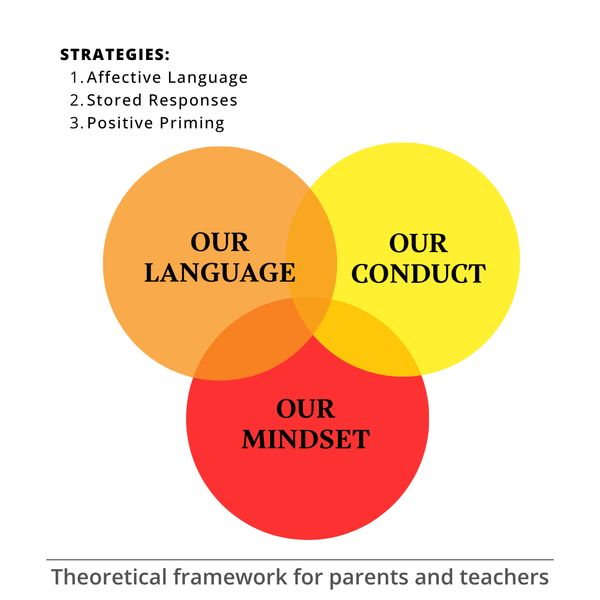
A restorative approach connects our mindset, conduct and language. The mindset beneath our response matters. When we think, “My child is deliberately making my life difficult,” our words and actions can quickly become angry or punitive. When we think, “My child has made a poor choice, but can learn to make it right,” we can still be firm while staying connected.
Our conduct is what we do: the boundaries we hold, the way we speak and the example we set. Our language is the message our children hear. When mindset, conduct and language line up, children receive a clear message: “You matter. Your choices matter. And you can learn from this.”
Diagram 1: Our Language, Our Conduct, Our Mindset
Start before trouble starts
Restorative practice is not only for times of conflict. It is also about building the kind of relationship that makes hard conversations possible.
One simple strategy is positive priming: using encouraging words before a challenging moment, rather than waiting for something to go wrong. At the start of the day, we might say, “I’m looking forward to hearing what you learn today,” or “I know you can handle that tricky situation.”
Positive priming is not pretending every day will be wonderful. It shows children that we expect good things of them and believe they can rise to the challenge.
Notice the behaviour you want to see more of: gratitude, persistence, honesty, helpfulness and courage. Specific encouragement is more powerful than a vague “Good job.”
“I noticed you kept going when that homework was difficult,” tells a child exactly what they did well and why it matters.
Be clear about expectations too. Rather than correcting every possible behaviour at once—an approach guaranteed to exhaust everyone—choose one priority. Perhaps it is speaking respectfully, getting ready on time or putting devices away when asked. Practise it, notice progress, and then move on to the next thing.
When things go wrong
Positive priming does not mean our children will never get it wrong. Everyone gets it wrong sometimes. The important message is this: our children are not the sum of their behaviour.
They may have been rude, excluded someone, forgotten their homework or made a spectacularly bad decision. That behaviour needs addressing. But labelling a child as “lazy”, “naughty”, “rude” or “a troublemaker” can leave them feeling they are simply bad—and that there is no way back.
Restorative relationships make room for a different message: “That choice was not okay, but you are still valued. Now, let’s work out what happened and how you can make it better.”
This shifts the focus from shame to responsibility. Shame says, “I am bad.” Responsibility says, “I did something that caused harm, and I can help repair it.” The second response offers young people both accountability and hope.
Calm before conversation
Knowing our children are more than their worst moment does not mean difficult conversations become easy. Sometimes, by the time we reach the conversation, everyone is already upset.
Cassie’s second seminar diagram is a simple reminder of why calm matters. When we feel threatened, frustrated or embarrassed, the parts of the brain involved in emotion, memory and safety can react very quickly. In those moments, access to language, logic and reasoning can be harder. Children and teenagers can find this especially difficult, because their capacity for emotional vocabulary and self-regulation is still developing.
Diagram 2: The Developing Brain and its Functions
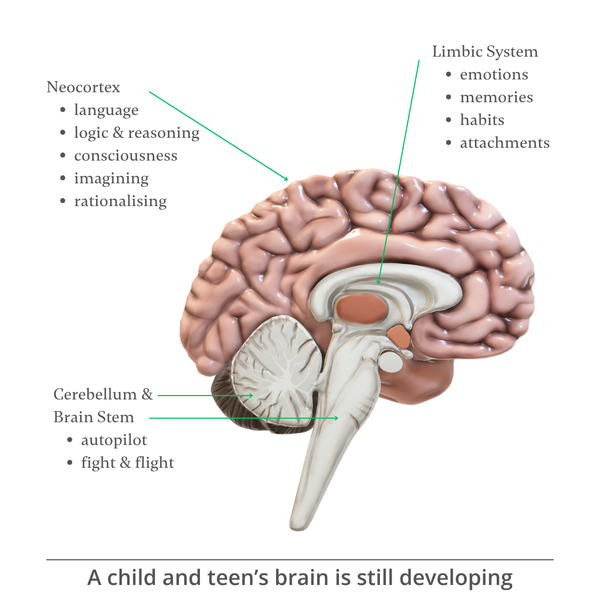
When emotions run high, calm and connection make reasoning and repair more possible. A restorative conversation therefore begins with self-regulation: taking a moment before anger or interrogation takes over. It may mean a drink of water, a short walk, a quieter voice, or saying, “I can see this has felt unfair.”
Once we are calm enough to respond rather than react, we can use affective language: naming our genuine feeling about a behaviour and communicating the expected next step.
“It frustrates me when dishes are left on the bench. Please go back and put them in the dishwasher.”
This is not a guilt trip or a judgement about a child’s character. We name the impact of the behaviour, not the child.
At other times, a longer conversation is not helpful or possible. This is where stored responses can help: calm, repeatable phrases that hold a boundary without adding fuel to the fire.
- “I appreciate that you want to talk. Now is not the right time; we will come back to it.”
- “I am disappointed in that choice. We need to talk about how it can be put right.”
- “That is not where it goes.”
For the tenth shoe, lunchbox or wet towel of the week, boring old repetition may be your superpower.
Making it right
When everyone is calmer, restorative questions open a door to reflection:
- What happened?
- What were you thinking or feeling at the time?
- Who has been affected, and how?
- What needs to happen to make things right?
- What support do you need to do that?
These questions move children beyond punishment and towards understanding the impact of their choices, accepting responsibility and repairing harm.
There will still be boundaries. There will still be consequences. There may still be slammed doors, missing socks and passionate legal submissions about why unloading the dishwasher is fundamentally unjust.
But perhaps the next time the plate remains on the bench, we can pause before turning it into a battle. We can hold the expectation, protect the relationship and ask the more important question: “How can we put this right?”
The plate may still need to go into the dishwasher. But the relationship does not need to go down with it.
